
Vaping is easy to start and hard to stop for the same reason: nicotine is always within reach. A disposable sits in your pocket, there is no ash and no smell, and a puff takes two seconds. That makes the habit denser than smoking ever was, with dozens of small hits through the day. Quitting is very doable. It just needs a plan for the hours when the hand reaches for the pocket.
The withdrawal timeline
The research on nicotine withdrawal comes mostly from cigarettes, but the drug is the same. The US National Cancer Institute (NCI) describes this pattern:
- 1 to 2 hoursThe first cravingsThey can start within an hour or two of the last nicotine.
- Days 1 to 3The peakSymptoms are usually at their worst in the first three days.
- Week 1Still the hardest weekIrritability, restlessness, poor focus, hunger and broken sleep are common.
- Weeks 2 to 4EasingIrritability may last 2 to 4 weeks. Low mood usually lifts within a month.
- After 1 monthMostly behind youCravings come less often. An occasional mild one can show up months later, usually at an old trigger.
Source: National Cancer Institute. Every person is different, and heavy use can mean a stronger first week.
Symptoms and what helps
| What you feel | Why | What helps |
|---|---|---|
| Strong urges to vape | Your brain expects nicotine at your usual times | A 15-minute delay, slow breathing, leave the room, drink cold water |
| Irritability, short temper | Nicotine withdrawal | Warn the people around you; move your body |
| Restlessness | Hands and habits without the device | Something to hold: a pen, a fidget, a mug |
| Trouble sleeping | Withdrawal | No caffeine after midday; a regular bedtime |
| Hunger | Nicotine dulls appetite | Planned snacks, protein at breakfast |
| Low mood | Withdrawal; usually lifts within a month | Daylight, people, a doctor if it does not lift |
How to quit vaping: a plan that works for a pocket habit
- Pick a quit day within two weeks: Close enough to keep the motivation, far enough to prepare.
- Count your current use: Pods, puffs or disposables a week. That number is your baseline and your savings.
- Get rid of every device on quit day: Spares in drawers and car doors are the classic relapse.
- Map your triggers: First thing in the morning, driving, after meals, studying, gaming, with certain friends. Write one "if this, then that" plan for each.
- Decide on support: Nicotine replacement (patches, gum, lozenges) can help adults; ask a pharmacist or doctor. Young people should talk to a doctor first.
- Use a text program or an app: In the US, Truth Initiative's free This is Quitting program works by text: send DITCHVAPE to 88709.
- Plan for the first slip: If it happens, it is information, not a verdict. Get back on the same day.
There is evidence that structured text support helps. In a randomised trial run by Truth Initiative with Brown University, about 38% of teenagers who got the This is Quitting messages were not vaping seven months later, compared with about 28% in the comparison group.
Truth Initiative and Brown University randomised trial with teenagers. Rounded figures.
What you save
Disposables and pods add up faster than people think, because the spending is spread across small purchases.
How much will you save if you stop vaping?
A week$42.00
A month$183
A year$2,192
Five years$10,958
Saved since your sober date:
Runs in your browser. Nothing you type is stored or sent.
Vaping, smoking and cannabis
- If you vaped to quit cigarettes, you have already done the hardest part once. The same timeline applies; our quit smoking timeline has the long-term health milestones.
- If you vape cannabis too, expect two sets of withdrawal that overlap in sleep and mood. Our cannabis withdrawal guide explains the timing.
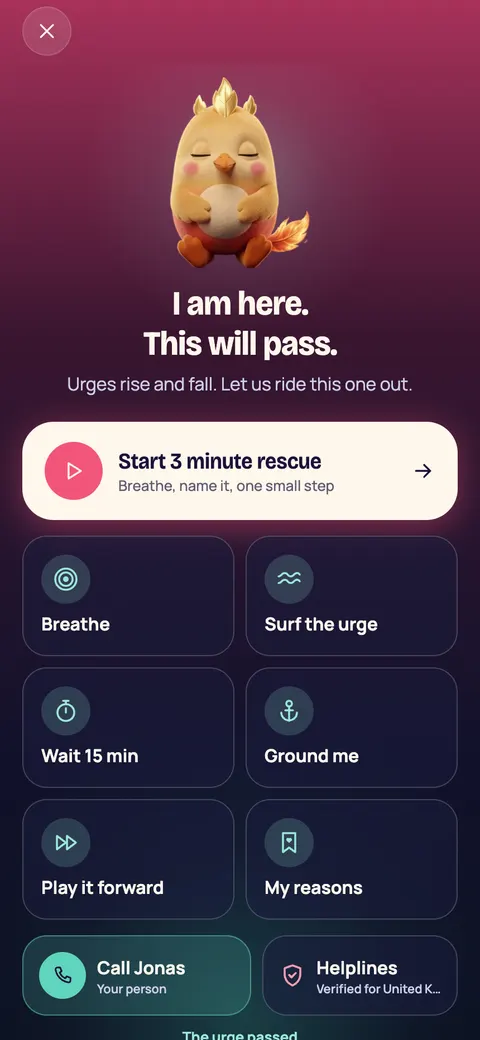
- SoberChamp tracks vaping as its own habit, with a clock, savings, a health timeline and SOS for cravings, alongside anything else you are working on.
FAQ
How long does it take to quit vaping?
Nicotine withdrawal is usually worst in the first three days and eases over about a month. The habit side (the hand reaching for the device at old trigger times) can take longer, which is why a plan for triggers matters.
What happens when you stop vaping?
Cravings can start within an hour or two. Irritability, restlessness, hunger, poor focus and broken sleep are common in the first week. Most symptoms ease within two to four weeks.
Is quitting vaping harder than quitting smoking?
It can feel harder because vaping is easier to do anywhere and often involves more frequent nicotine hits. The withdrawal itself follows the same nicotine pattern.
Can I use nicotine patches to quit vaping?
Many adults use nicotine replacement to quit vaping. Ask a doctor or pharmacist about the right strength. Teenagers should talk to a doctor before using it.
Is there free help to quit vaping?
In the US, text DITCHVAPE to 88709 for Truth Initiative's free This is Quitting program, or call 1-800-QUIT-NOW for free coaching.
Sources
- National Cancer Institute: Handling nicotine withdrawal and triggers.
- Truth Initiative: About This is Quitting and Quitting e-cigarettes.
- Graham AL, et al. A vaping cessation text message program for adolescent e-cigarette users: a randomized clinical trial. JAMA. 2024;332(9):713-721.
- Smokefree.gov: Understanding withdrawal.

Your sober clock, SOS and Sori in one app
SoberChamp tracks any habit, helps in one tap when a craving hits, and gives you Sori, an AI companion who answers in your language. The core tools are free.
Get notified at launchComing soon to iPhone and Android. One email on launch day, nothing else unless you ask.